
Buffalo Rising: Should I stay or should I go…

Alberta is high on Canadian minds lately, and as October 19th is comin like a freight train – all sorts of mud will be slung. Keep your eye on the prize…
After decades of federal imbalance, paired with historic western unity and a strong referendum showing; Alberta could finally FORCE fair negotiations or unlock a resource-powered future. Albertans may not fully agree to go it alone, but the majority do wholeheartedly agree — something’s gotta give, and if Alberta doesn’t stand united now, this will be their last shot, even if it’s for a UNITED CANADA with a strong Alberta. Whether its Conservatives in power or historically, mostly the Liberals.. you know, we know, they know – nothing will ever change, they like it this way… Berta, on its knees.
Rewind: The Buffalo Precedent – Ottawa’s Historic Power Play
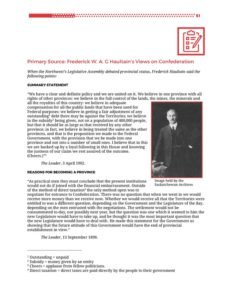
In 1905, Sir Frederick Haultain proposed creating one large province called Buffalo from the North-West Territories — uniting what is now Alberta and Saskatchewan. At the time, and still stands, this made geographic and economic sense — One powerful western entity with vast resources and agricultural potential that could stand strongly within Confederation.
But, Liberal Prime Minister Wilfrid Laurier rejected the idea and split the region into two provinces. Historians note the decision was partly driven by a desire to prevent a single, massive western powerhouse from challenging central Canadian (Ontario-Quebec) dominance. They were scared. A united Buffalo was viewed as too big and too independent to control easily. This early federal meddling to keep the West divided set a pattern that many Albertans see repeating today through fiscal extraction and resource policy constraints.
A United Canada
The standard arguments for staying in Canada are reasonable on the surface: economic scale, stability, and security. However, when examined closely alongside Alberta’s strengths, successful historical precedents, and practical counters, the case for at least seriously considering greater sovereignty (or full independence if needed) becomes compelling. With good management, especially in partnership with Saskatchewan, the long-term upside could be significant.
Let’s first examine some real success stories: Countries That Split and Thrived
History shows that splits can succeed, particularly when the new entity starts with solid fundamentals and pursues smart policies:
- Singapore was expelled from Malaysia in 1965 — resource-poor, vulnerable, and facing enormous challenges. Through disciplined governance, openness to trade, and bold economic strategy, it became one of the richest places on Earth per capita. (Population: was approx. 1.9 million at the time)
- The Velvet Divorce between Czech Republic and Slovakia in 1993 was peaceful and mutually agreed. Both nations are significantly more prosperous today. (The population was divided between the two new republics roughly in a 2:1 ratio – 10.3M/5.3M)
- The Baltic states (Estonia, Latvia, Lithuania) regained independence from the Soviet Union amid its collapse. After initial hardships, they became high-income “Baltic Tigers” with low corruption, high economic freedom, and impressive per-capita gains. (Pop: was approx 8M at the time)
Alberta starts in a far stronger position than these examples. It possesses world-class oil sands reserves (roughly 165 billion barrels), skilled workers, modern infrastructure, rule of law, and high GDP per capita. Alberta isn’t rising from poverty — it’s an established economic engine seeking to remove external constraints. A modern Buffalo partnership with Saskatchewan would add further scale, potash, uranium, and agricultural strength. (Population: current 5M / Sask. 1.2M; both experienced rapid growth from Mass Immigration, and some due to inter-provincial migration. Both provinces are known for a lower median age and are family oriented)
So, should they stay or should they go?: Counter arguments
1. Economic Scale, Market Access, and Diversification
Critics argue that leaving would disrupt seamless trade within Canada and expose Alberta’s resource-heavy economy to greater volatility.
Counter: Alberta’s highest-value trade is already heavily oriented toward the United States. With indications of U.S. openness to recognition and cooperation, new pipelines, rail corridors, and direct deals could expand opportunities. Short-term friction with other provinces is real, but manageable. A Buffalo alliance with Saskatchewan provides meaningful diversification. Freed from federal regulatory layers, faster permitting and lower taxes could drive investment, helping Alberta become a true “Singapore of the Prairies” — a nimble, pro-growth energy and resources hub.
2. Fiscal and Monetary Stability
Alberta is a major net contributor, sending an estimated $15–25 billion more annually to Ottawa than it receives back. Independence would bring new costs for defense, diplomacy, pensions, and other services. Some models project an initial GDP contraction of several percent due to uncertainty.
Counter: Alberta would retain the full gross federal revenue stream (often estimated at $60–75 billion+), creating real potential for surpluses, significant tax cuts, and services tailored to its demographics. Dollarization (adopting the U.S. dollar) would provide immediate stability and closer U.S. integration. While new sovereign expenses are genuine, resource royalties and efficient governance can cover them. Keeping more of what the province produces could ultimately deliver stronger finances than continuing as a net subsidizer.
3. Geopolitical Security, Defense, and International Standing
Canada offers collective defense (NATO/NORAD), existing trade deals, and institutional stability.
Counter: A lean, energy-security-focused military paired with continued U.S. partnerships could manage costs effectively. As a major global supplier of energy and critical minerals, a sovereign Alberta (or Buffalo) would carry significant negotiating leverage for trade deals. Indigenous treaties and land claims would require renegotiation, but this could occur from a position of strength under a new constitution.
4. Landlocked Reality and Practical Concerns
A common worry is becoming landlocked, dependent on neighbors for export access, alongside potential talent flight and Indigenous issues.
Counter: Many landlocked countries thrive when exporting high-value products and securing smart transit agreements. Alberta already moves massive volumes efficiently via pipelines and rail. Constructive U.S. relations would make expanded southern pipelines and corridors to American ports more feasible, while negotiated access through British Columbia remains possible. Resource wealth funds infrastructure solutions. On people and property: a low-tax, high-opportunity jurisdiction with stronger constitutional property rights could attract and retain talent over time, reversing any short-term outflows.
5. Pensions (The CPP Question)
Many worry about what happens to retirement security if Alberta leaves the Canada Pension Plan (CPP), fearing lost benefits or major transition risks.
Counter: Alberta has long been a significant net contributor to the CPP. From 1981 to 2022, Albertans contributed an estimated $53.6 billion more into the plan than retirees in the province received in benefits, due to higher employment, higher average incomes, and a younger population. Proponents of an Alberta Pension Plan (APP) argue the province could claim a large share of CPP assets (potentially hundreds of billions, depending on negotiations) and run its own plan with much lower contribution rates — for example, dropping from the current 9.9% to around 5.9% while maintaining similar or better benefits.
Even in more conservative scenarios with a smaller asset transfer, Albertans could still see meaningful savings on contributions. A new provincial plan would be tailored to Alberta’s demographics and investment preferences, potentially delivering stronger returns. While negotiations with the rest of Canada would be complex and contentious, the underlying math favors Alberta due to its outsized contributions over decades. This is another area where sovereignty could turn a current subsidy into a direct advantage for Alberta workers and retirees.
The Rocky Road to Greater Prosperity
The Royalty in Ottawa don’t listen, only when they are pushed
Transition would involve real challenges: legal processes under the Clarity Act, debt division negotiations, Indigenous claims, and short-to-medium term economic uncertainty. A strong referendum showing (even short of a majority) would not guarantee immediate separation but could powerfully force Ottawa into serious negotiations on asymmetric federalism — greater autonomy on resources, fiscal terms, immigration, and opt-outs — as Quebec’s near-separation-misses demonstrated. Heck, we can even go as far back when Nova Scotia wanted to split – their reasoning, they weren’t even asked to join, they feared losing control of its economy to a central government — in the end the feds offered better financial terms, and infrastructure support – not to mention they bought off leadership which broke the movement. With all these movements, it proves, the Royalty in Ottawa don’t listen, only when they are pushed…
The potential prize is meaningful, and don’t for a minute think the feds don’t realize this. With disciplined leadership, U.S. alignment, full resource development, and sound policy, Alberta (and a Buffalo partner) could achieve higher long-term prosperity: lower taxes, faster growth, retained wealth, and decisions made locally rather than by a distant federal government with a history of wariness toward a strong West.
this will be the only time your vote actually carries weight
Even with a YES win, Alberta does not need to leave Canada — don’t let them drive that fear into you to take away any leverage you might have. All strong scenarios gives Alberta a fighting chance for change whether in a United Canada or as a Republic — this will be the only time your vote actually carries weight. After more than a century of patterns that prioritize control over fairness, the province has the fundamentals to chart its own course successfully. For sure, the rocky road is undeniable — but for an ENERGY GIANT with Alberta’s advantages, the destination could be worth the journey. YOU and your family are worth it, YOUR province is the MOTHER F**G POWERHOUSE that has been stifled for decades, YOU have every right to be proud of that and want more — don’t let anyone else tell you different.
Or… Albertans can keep circling the collective drain: 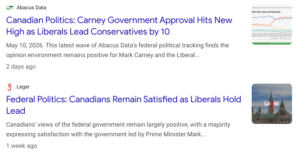 Perhaps Albertans need to take the Eastern polls seriously. As Canada prepares for CCP infiltration, uncoupling from the United States, Globalism, and wild bills to stomp on Canadians freedom of speech… Undeniably, the East will keep choosing who rules the West as the POLLS keep
 warning praising…
The history, the numbers, the precedents, and the counters all deserve honest debate as Albertans consider their future.
This indecision’s bugging me
If you don’t want me, set me free…
Should I stay or should I go now?
If I go there will be trouble
And if I stay it will be double
So you gotta let me know
Should I stay or should I go?
Related Posts
OneBC (grassroots conservative party) promises 25% tax cut across all personal and corporate income tax – while BC “Conservative” interim leader, formerly a BC Liberal/United MLA promises to retain NDP taxes but not hike them – NDP promises targeted housing taxes – greens target the rich
It started out as a JOKE, then Canadians, manipulated by govt and media lost their collective minds; rabid, petty, cult-like behaviour ensued: Trump, believe it or not, has held back, yet now there’s a noteable shift… We are in deep trouble!
Canada is only as good as its trade with the US
Alberta’s Last Chance: Why a Strong Vote for Real Change Could Finally Get You Heard – Even If You Never Want to Leave Canada